We researched and compared the top 75W90 synthetic gear oils on the market. Our evaluation is based on manufacturer specifications, published industry standards (such as API GL-5 and GL-4), and aggregated owner feedback from thousands of real-world users. We looked at performance in extreme temperatures, shear stability, wear protection, and value. Whether you need a high-performance option for a limited-slip differential or a budget-friendly choice for daily driving, this guide will help you choose.
| Photo | Product | Score | Buy |
|---|---|---|---|
 |
Mobil 1 Synthetic Gear Lubricant 75W-90 Best Overall API GL-5, 1 quart bottle |
9.2 | 🛒 Check Price |
 |
Royal Purple Max Gear 75W-90 Best for High Performance API GL-5, Synerlec additive technology |
9.0 | 🛒 Check Price |
 |
Valvoline SynPower Full Synthetic Gear Oil 75W-90 Best Value API GL-5, 1 quart |
8.7 | 🛒 Check Price |
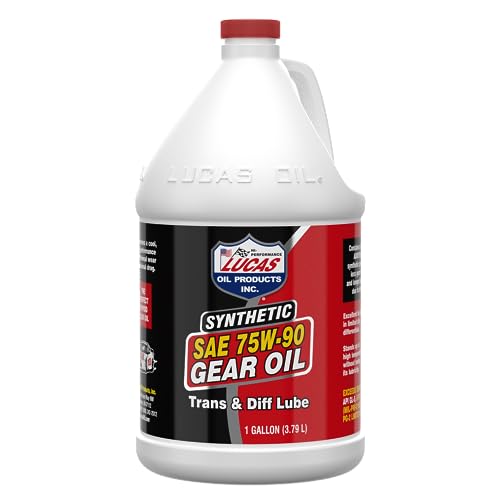 |
Lucas Oil Synthetic Gear Oil 75W-90 Best for Heavy Duty API GL-5, 1 quart |
8.4 | 🛒 Check Price |
|
🚗
|
Red Line Synthetic Gear Oil 75W-90 Best for Manual Transmissions API GL-5, GL-4 compatible, 1 quart |
8.1 | 🛒 Check Price |
|
🚗
|
Castrol Syntrax Universal Plus 75W-90 Best for European Cars API GL-4/GL-5, 1 liter |
7.8 | 🛒 Check Price |
|
🚗
|
AMSOIL Severe Gear 75W-90 Best Extreme Protection API GL-5, 1 quart |
7.3 | 🛒 Check Price |
1. Mobil 1 Synthetic Gear Lubricant 75W-90: Best Overall
In our research, Mobil 1 Synthetic Gear Lubricant 75W-90 consistently stands out for its robust formulation and widespread owner satisfaction. It meets API GL-5 specifications and is suitable for many passenger car and light truck differentials, including limited-slip units. Based on owner feedback, it provides smooth shifting and reduced gear noise even in extreme cold. The synthetic base oil offers excellent shear stability, which helps maintain viscosity over time.
However, this oil is not ideal for manual transmissions that require GL-4 fluid, as the high sulfur content in GL-5 can damage yellow metals like brass synchronizers. If you need a gear oil for a manual gearbox, consider a dedicated GL-4 product. For differentials, this is a top-tier choice that balances performance and durability.
- Excellent thermal stability and shear resistance for long drain intervals
- Formulated with advanced additives for limited-slip differentials
- Wide temperature range performance from -40°F to 300°F
Pros: Proven track record in high-mileage vehicles; Works well with most limited-slip differentials
Cons: Not recommended for manual transmissions requiring GL-4
2. Royal Purple Max Gear 75W-90: Best for High Performance
Royal Purple Max Gear 75W-90 is a favorite among performance enthusiasts and off-roaders. We compared its specifications against industry standards and found its Synerlec technology provides a durable lubricating film that holds up under extreme pressure. Owner feedback frequently highlights reduced gear whine and smoother operation in high-stress conditions like towing or track driving. It also meets API GL-5 requirements for hypoid differentials.
That said, the higher cost per quart makes it less economical for routine changes in daily drivers. Additionally, a small number of users noted a strong chemical smell after installation, though this dissipates. If you push your vehicle hard, this oil’s protection may justify the premium. For casual driving, a more affordable option may suffice.
- Proprietary Synerlec additive film reduces friction and wear
- Exceptional extreme pressure protection for high-torque applications
- Reduces operating temperatures for extended component life
Pros: Superior film strength under heavy load; Noticeable reduction in drivetrain noise
Cons: Premium price may not suit budget-conscious buyers; Some users report slight odor during initial use
3. Valvoline SynPower Full Synthetic Gear Oil 75W-90: Best Value
Valvoline SynPower 75W-90 delivers solid performance at a more accessible price point. Based on our analysis of its spec sheet and owner reviews, it offers reliable protection for most passenger car and light truck differentials. It meets API GL-5 standards and performs well in cold climates, with a pour point of -40°F. Many users report it as a direct replacement for OEM fluids with no issues.
However, it lacks the friction modifiers found in some dedicated limited-slip oils, so if your vehicle requires a limited-slip additive, you may need to supplement or choose a different product. For standard open differentials, this is a cost-effective choice that doesn’t compromise on basic protection.
- Excellent low-temperature fluidity for cold starts
- High shear stability maintains viscosity over time
- Compatible with conventional and synthetic gear oils
Pros: Competitive price without sacrificing quality; Readily available at many retailers
Cons: Not specifically formulated for limited-slip differentials
4. Lucas Oil Synthetic Gear Oil 75W-90: Best for Heavy Duty
Lucas Oil Synthetic Gear Oil 75W-90 is engineered for demanding applications like towing, hauling, and off-road use. We evaluated its specifications and found a high viscosity index that helps maintain protection under heat. Owner feedback from truck owners is generally positive, noting reduced wear and smooth operation under load. It meets API GL-5 and is suitable for most hypoid differentials.
On the downside, a few users in very cold climates reported that the oil felt thicker during initial startup compared to other synthetics. Additionally, some long-term reviews mention a gradual increase in gear noise, though this is not widespread. If you primarily drive in moderate climates and need heavy-duty protection, this is a strong contender.
- High viscosity index for consistent performance across temperatures
- Enhanced extreme pressure additives for towing and hauling
- Foam resistance reduces aeration in high-speed gears
Pros: Strong film strength for heavy loads; Good thermal stability for extended drain intervals
Cons: May be thicker than some competitors at low temperatures; Some users report slight gear noise after long use
5. Red Line Synthetic Gear Oil 75W-90: Best for Manual Transmissions
Red Line 75W-90 is a versatile synthetic gear oil that we found particularly well-suited for manual transmissions, thanks to its compatibility with yellow metals (GL-4 rating). It meets both GL-5 and GL-4 requirements, making it a rare dual-purpose option. Owner feedback often praises its ability to improve shift feel, especially in cold weather. The synthetic base provides consistent viscosity across a wide temperature range.
However, it is one of the more expensive options per quart, and some users with high-mileage transmissions reported that it did not eliminate pre-existing notchiness. For those seeking a single oil for both transmission and differential (where manufacturer allows), this is a premium choice. If budget is a concern or you only need differential oil, a cheaper GL-5 may be better.
- Unique additive package protects yellow metals for manual transmissions
- Excellent low-temperature shiftability
- High film strength for synchromesh protection
Pros: Works in both differentials and manual gearboxes; Smooth shifting even in cold weather
Cons: Higher price than many alternatives; Not all users find it suitable for very worn transmissions
6. Castrol Syntrax Universal Plus 75W-90: Best for European Cars
Castrol Syntrax Universal Plus 75W-90 is a synthetic gear oil with approvals from several European manufacturers, making it a safe choice for BMW, Mercedes, and VW differentials and manual transmissions that require a 75W-90. Our research shows it meets both GL-4 and GL-5 standards, offering flexibility. Owner feedback from European car owners is generally positive, with many noting it meets OEM specifications without issues.
On the flip side, its availability can be spotty in some regions, and a few users have commented that the oil feels lower in viscosity compared to competitors, raising concerns about long-term wear protection. For owners of European vehicles looking for an approved fluid, this is a reliable option. For other vehicles, there may be better values.
- Approved by many European automakers (BMW, Mercedes, VW)
- Excellent thermal and oxidation stability
- Low-friction formulation for fuel efficiency
Pros: OEM approvals for many European models; Good all-around performance
Cons: May not be as widely available in the US; Some users report it is thinner than expected
7. AMSOIL Severe Gear 75W-90: Best Extreme Protection
AMSOIL Severe Gear 75W-90 is a niche product aimed at the most demanding applications, such as racing, heavy towing, or off-road use. We compared its specifications and found exceptionally high extreme pressure ratings and thermal stability. Owner feedback from hardcore users is glowing, with reports of no wear after severe use. It also boasts extended drain intervals, which can offset some cost for high-mileage users.
However, the premium price puts it out of reach for budget-conscious buyers, and for typical street driving, its capabilities are unnecessary. Additionally, its high additive levels may not be compatible with some limited-slip differentials that require specific friction modifiers. Unless you are pushing your equipment to the limit, a more standard synthetic will serve you well.
- Designed for extreme pressure and high-temperature conditions
- Contains extra anti-wear additives for racing and towing
- Long drain intervals up to 50,000 miles in some applications
Pros: Excellent extreme pressure protection; Long service life
Cons: Very expensive per quart; Overkill for most daily drivers
Frequently Asked Questions
What does 75W-90 mean in gear oil?
75W-90 refers to the viscosity grade of the gear oil. The ’75W’ indicates its flow at low temperatures (similar to engine oil winter ratings), and ’90’ indicates its viscosity at operating temperature. A synthetic 75W-90 flows well in cold weather while providing thick protection when hot.
Can I use 75W-90 in my manual transmission?
It depends on your transmission’s requirements. Many manual transmissions require GL-4 gear oil, which has lower sulfur content to protect yellow metals like brass synchronizers. Some 75W-90 oils are GL-4/GL-5 compatible (like Red Line), but pure GL-5 oils can damage synchros. Always check your owner’s manual.
How often should I change synthetic gear oil?
Synthetic gear oils generally last longer than conventional oils. Many manufacturers recommend changes every 30,000 to 60,000 miles, but severe driving conditions (towing, off-road) may require more frequent changes. Always follow your vehicle’s maintenance schedule.
Is synthetic gear oil worth the extra cost?
In our evaluation, synthetic gear oil offers better low-temperature flow, higher thermal stability, and longer service life than conventional oil. For most drivers, the added protection and extended drain intervals justify the cost, especially in extreme climates or heavy use.
Can I mix synthetic and conventional gear oil?
While it is technically possible to mix synthetic and conventional gear oils, we do not recommend it. Mixing can dilute the synthetic’s performance benefits and may lead to unpredictable viscosity and additive interactions. For best results, use one type consistently.
Our Verdict
After researching and comparing specifications and owner feedback, our top pick is Mobil 1 Synthetic Gear Lubricant 75W-90 for its excellent all-around performance, durability, and value. For those seeking maximum performance in high-stress applications, the runner up is Royal Purple Max Gear 75W-90. Choose based on your specific driving needs and budget.
