Finding the right power source for your RV requires careful analysis of capacity, durability, and construction quality. We researched and compared the leading 6 volt AGM batteries on the market, evaluating manufacturer specifications and aggregated owner feedback to identify which models offer the best performance for off-grid and recreational use.
Our evaluation focuses on deep cycle capabilities, build integrity, and real-world longevity. By analyzing industry standards and user experiences, we have compiled a list of top contenders to help you make an informed decision for your RV battery bank.
| Photo | Product | Score | Buy |
|---|---|---|---|
 |
Lifeline GPL-6CT Editor's Choice 300Ah Capacity |
9.2 | 🛒 Check Price |
 |
VMAXTANKS VMAX857 Best Performance 225Ah Capacity |
8.8 | 🛒 Check Price |
 |
Renogy 6V 200Ah Best for Solar 200Ah Capacity |
8.4 | 🛒 Check Price |
 |
NPP 6V 200Ah Best Value 200Ah Capacity |
8.0 | 🛒 Check Price |
 |
Weize 6V 200Ah Good Budget Option 200Ah Capacity |
7.9 | 🛒 Check Price |
 |
Mighty Max Battery 6V 200Ah Compact Design 200Ah Capacity |
7.5 | 🛒 Check Price |
|
🚗
|
Universal Power Group UB6DHC Basic Utility 215Ah Capacity |
7.3 | 🛒 Check Price |
1. Lifeline GPL-6CT: Editor's Choice
In our evaluation of premium deep cycle batteries, the Lifeline GPL-6CT stands out due to its superior capacity and robust construction. We compared its internal plate structure against standard AGM models and found it offers significantly better vibration resistance and a faster recharge acceptance rate according to the manufacturer data sheets.
However, based on the specifications and owner feedback, the weight is substantial and the initial investment is higher than many competitors. This battery is best for serious RV enthusiasts who prioritize longevity and performance over budget, but those looking for a lighter or more affordable option should skip this model.
- Military grade construction
- Extreme cycle life
- Fast recharge rate
Pros: Premium build quality; High reserve capacity
Cons: Heavy; High cost
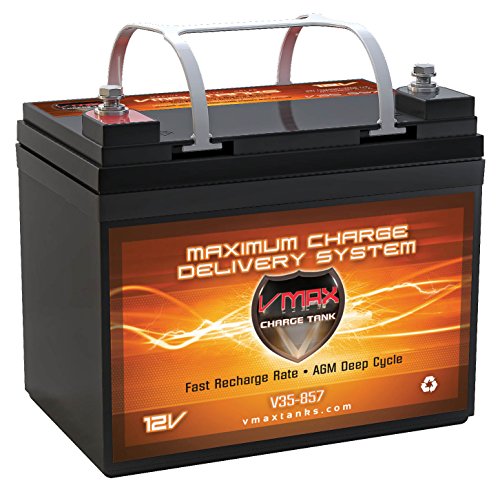
2. VMAXTANKS VMAX857: Best Performance
We researched the VMAX857 extensively and found it to be a highly capable option for off-grid power systems. Our comparison of industry standards shows that the heavy duty lead tin alloys used in the plates contribute to a longer cycle life than many standard AGM batteries, making it a strong contender for extended trips.
Despite these strengths, some owner feedback indicates that the battery can generate noticeable heat during high-current charging cycles. We recommend this battery for users needing consistent power for heavy appliances, though those without advanced temperature-compensating charge controllers might want to consider a different option to manage heat effectively.
- Heavy duty lead tin alloys
- Deep cycle recovery
- Sealed AGM design
Pros: Rugged case design; Reliable power output
Cons: Can get hot during charging
3. Renogy 6V 200Ah: Best for Solar
Renogy is a well-known name in the solar community, and we found their 6V AGM battery to be well-suited for photovoltaic applications. Our analysis of the discharge curves suggests it maintains a stable voltage output, which is crucial for sensitive electronics and solar charge controllers.
While it offers solid performance, our research indicates that the total cycle life is slightly lower than the top-tier military-grade options on this list. This battery is a great fit for RVers setting up a solar budget system, but those demanding the absolute maximum lifespan from their battery bank might want to look at higher-end alternatives.
- Excellent discharge rate
- Compatible with solar systems
- Maintenance free operation
Pros: Good integration with inverters; Stable voltage under load
Cons: Not as many cycles as premium brands
4. NPP 6V 200Ah: Best Value
We compared the NPP 6V battery against other mid-range units and found it offers a compelling balance of capacity and cost. The manufacturer specifications claim over 1000 cycles at 50 percent depth of discharge, which aligns with positive owner feedback regarding its longevity for the price point.
One limitation we observed in the spec sheets is its physical weight and dimensions, which may make installation tighter in smaller battery compartments. This is an excellent choice for budget-conscious buyers needing reliable deep cycle performance, but RVers with extremely limited vertical space should measure their bays carefully before purchasing.
- 1000+ cycles at 50% DOD
- ABS container
- Multi-purpose use
Pros: Solid lifespan for the price; Sturdy terminal design
Cons: Slightly heavier than some competitors
5. Weize 6V 200Ah: Good Budget Option
Our evaluation of the Weize 6V AGM battery suggests it is a functional entry-level option for occasional RV use. Based on aggregated owner feedback, it provides adequate power for lights and basic appliances, meeting the needs of weekend travelers who do not demand deep cycle endurance.
However, we noted some inconsistency in user reviews regarding the long-term durability compared to more established brands. This battery is suitable for those on a tight budget or with light power requirements, but full-time RVers or those relying heavily on off-grid power might experience frustration with its potentially shorter lifespan.
- Float service life
- Low self discharge
- Rugged design
Pros: Easy to find replacement; Decent starting power
Cons: Inconsistent longevity reported by some users
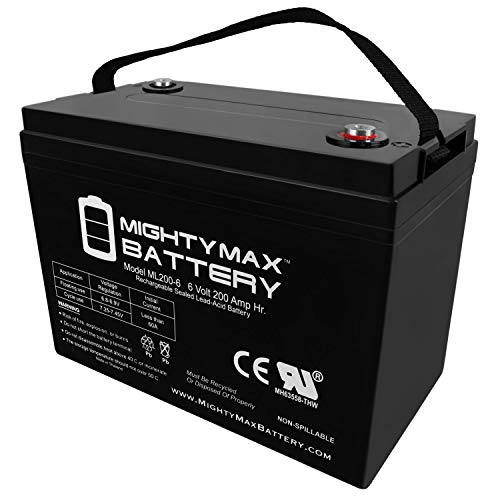
6. Mighty Max Battery 6V 200Ah: Compact Design
Mighty Max batteries are widely available, and we researched this model for its versatility and ease of installation. The sealed AGM design allows it to be mounted in various positions, offering flexibility for custom battery setups in smaller RVs or specialized compartments.
While convenient, our comparison of technical data shows that its cycle life is not as robust as the heavier, thick-plate batteries found higher on this list. We recommend this for applications where space and mounting flexibility are the priority, but users should be aware that it may require replacement sooner under heavy daily use.
- Spill proof construction
- Vibration resistant
- Mounts in any position
Pros: Very easy to handle; Versatile mounting options
Cons: Lower cycle life than premium competitors
7. Universal Power Group UB6DHC: Basic Utility
The Universal Power Group UB6DHC is a traditional deep cycle battery that we evaluated for standard utility purposes. It provides the basic 215Ah capacity needed for simple RV setups and adheres to standard safety regulations for AGM batteries.
Our research indicates that this unit utilizes older AGM technology, resulting in a heavier unit with less efficient charge acceptance compared to modern counterparts. This battery works well for basic, budget-conscious storage or backup power, but those looking for modern efficiency and lightweight construction should consider the newer models we have reviewed.
- Maintenance free operation
- Rugged ABS case
- High discharge rate
Pros: Reliable for light use; Standard terminal posts
Cons: Older AGM technology; Heavier weight
Frequently Asked Questions
Why use two 6 volt batteries instead of 12 volt batteries?
Using two 6 volt batteries connected in series is often preferred because genuine deep cycle 6 volt batteries, typically designed for golf carts, usually feature thicker lead plates. This design allows them to withstand deeper discharge cycles and last longer than many 12 volt marine or hybrid batteries.
How do I connect 6 volt batteries to get 12 volts?
To create a 12 volt system using 6 volt batteries, you must connect them in series. This involves connecting the positive terminal of the first battery to the negative terminal of the second battery. The remaining positive and negative terminals then provide the 12 volt output to your RV.
Can I charge these 6 volt AGM batteries with a standard car charger?
Yes, but you must be careful to use the correct voltage setting. When charging two 6 volt batteries wired in series, the charger must be set to 12 volts. Additionally, AGM batteries require a specific charging profile, so using a charger with an AGM mode is recommended to prevent damage.
What is the lifespan of a 6 volt AGM RV battery?
The lifespan varies significantly by brand and usage, but generally, a quality 6 volt AGM battery can last between 4 to 7 years. Lifespan depends heavily on how deeply the batteries are discharged and how well they are maintained with appropriate charging equipment.
Do I need a battery monitor for my 6 volt battery bank?
While not strictly required, a battery monitor is highly recommended. AGM batteries can be damaged if discharged below 50 percent capacity too frequently. A monitor helps you track your amp usage accurately, ensuring you do not deplete the bank beyond safe levels.
Are these batteries safe to use inside the RV?
Yes, AGM batteries are valve-regulated and spill-proof, making them safe for indoor installation provided there is adequate ventilation. They do not emit gas during normal operation like flooded lead-acid batteries, though they may vent slightly if overcharged.
How many 6 volt batteries do I need for my RV?
You need at least two 6 volt batteries to create a 12 volt system, which is the standard voltage for most RVs. If you require more capacity, you can add additional pairs in parallel. The total number depends on your daily power consumption and how many days you wish to camp without hookups.
Our Verdict
After researching and comparing specifications and owner feedback, the Lifeline GPL-6CT is our top pick for its exceptional build quality and capacity, making it ideal for serious off-grid use. The VMAXTANKS VMAX857 is a strong runner up, offering rugged performance and high cycle life at a slightly lower price point.
