A 48 volt system is the sweet spot for modern golf carts, giving you enough torque to climb hills and enough range to finish a full round or run errands around a neighborhood without anxiety. The battery you choose decides everything that matters: how far you go on a charge, how long the pack lasts before it fades, how fast it recharges, and how much weight you are dragging around. We looked closely at lithium iron phosphate (LiFePO4) packs and traditional lead-acid sets to see which ones actually deliver on those promises.
This guide covers seven of the strongest options buyers are choosing right now, from drop-in 48V lithium batteries that replace a whole bank of six 8-volt batteries to proven deep-cycle lead-acid sets for people who want a familiar setup. Every pick below is judged on real ownership concerns like cycle life, cold weather behavior, BMS protection, and how painless installation is on common EZGO, Club Car, and Yamaha carts.
| Photo | Product | Score | Buy |
|---|---|---|---|
 |
Trojan T-875 8V Deep Cycle Battery (Set of 6) Best Overall Lead-Acid 8V flooded lead-acid, 170Ah, six wired in series for 48V |
9.5 | 🛒 Check Price |
 |
Dakota Lithium 48V 60Ah LiFePO4 Golf Cart Battery Best Lithium Upgrade 48V 60Ah LiFePO4, built-in BMS, single drop-in pack |
9.4 | 🛒 Check Price |
 |
Allied Lithium 48V 100Ah Golf Cart Battery Best Long Range 48V 100Ah LiFePO4, high capacity, integrated smart BMS |
9.3 | 🛒 Check Price |
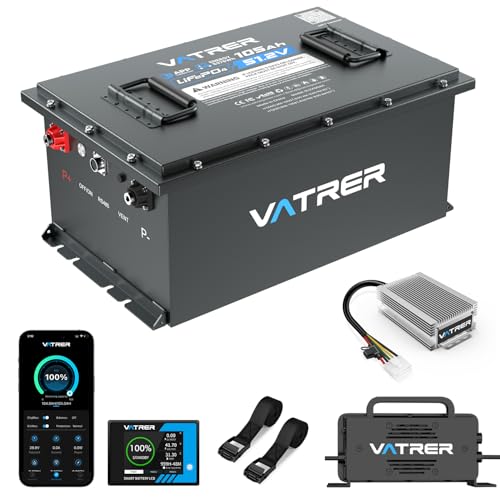 |
ECO LFP 48V 105Ah LiFePO4 Golf Cart Battery Best Value Lithium 48V 105Ah LiFePO4, 100A BMS, low temperature cutoff |
9.1 | 🛒 Check Price |
 |
Trojan T-1275 12V Deep Cycle Battery (Set of 4) Best Simple Wiring 12V flooded lead-acid, 150Ah, four wired in series for 48V |
8.8 | 🛒 Check Price |
 |
Weize 48V 100Ah LiFePO4 Golf Cart Battery Best for DIY Installers 48V 100Ah LiFePO4, 100A BMS, Bluetooth monitoring on select models |
8.5 | 🛒 Check Price |
 |
Duracell Ultra 8V GC2 Deep Cycle Battery (Set of 6) Best Trusted Brand Lead-Acid 8V flooded lead-acid, GC2 case, six wired in series for 48V |
8.3 | 🛒 Check Price |
1. Trojan T-875 8V Deep Cycle Battery (Set of 6): Best Overall Lead-Acid
Trojan has been the default name in golf cart power for decades, and the T-875 is the reason why. Each 8-volt flooded cell uses thick, durable plates and Trojan’s Maxguard separator to survive the deep discharge cycles a cart puts a battery through every single round. Wire six of them in series and you have a dependable 48V bank that delivers steady torque up hills and consistent range across a long day of driving. For owners who already run a standard lead-acid charger and want a no-surprises replacement, this set is the safe, sensible choice.
The honest weakness is maintenance. These are flooded batteries, so you must check water levels regularly with distilled water, keep the terminals clean, and stay disciplined about recharging after every use to avoid sulfation. They are also heavy and slow to recharge compared with lithium. If you neglect them, lifespan drops fast. Treat them well and they reward you, but they are not a set-and-forget solution.
- Six 8-volt batteries wire in series to build a true 48V bank
- Thick plates built for repeated deep discharge and recharge
- Maxguard advanced separator helps reduce internal shorting
Pros: Long proven track record on EZGO and Club Car fleets; Strong run time per round when kept watered and charged; Widely supported by chargers and service shops
Cons: Requires regular distilled water top-ups and terminal cleaning; Heavy bank that takes longer to recharge than lithium
2. Dakota Lithium 48V 60Ah LiFePO4 Golf Cart Battery: Best Lithium Upgrade
Switching from lead-acid to the Dakota Lithium 48V pack is the single biggest quality of life upgrade most cart owners can make. One sealed LiFePO4 unit drops in where a heavy bank of batteries used to live, shedding a huge amount of weight that immediately translates into quicker acceleration and longer range from the same motor. Because lithium holds its voltage nearly flat through the discharge curve, your cart feels just as strong at twenty percent as it does at full, instead of crawling home like a tired lead-acid setup.
The catch is the charger and the wiring. Many owners will need a lithium-rated charger to get full cycle life and proper balancing, and the install can require new cabling and a tray adapter depending on your cart model. Dakota’s built-in BMS handles protection well, but it is conservative and can shut output in extreme cold, so frigid climates need planning. For most buyers, though, the long cycle life and freedom from maintenance make this worth the effort.
- One drop-in pack replaces an entire bank of lead-acid batteries
- LiFePO4 chemistry rated for thousands of deep cycles
- Integrated BMS guards against overcharge, over-discharge, and heat
Pros: Dramatic weight savings improve range and acceleration; Almost no maintenance, no watering or terminal scrubbing; Holds voltage flat so power stays strong near empty
Cons: Higher upfront commitment than a lead-acid set; May need a lithium-compatible charger for best results
3. Allied Lithium 48V 100Ah Golf Cart Battery: Best Long Range
When range is the priority, the Allied Lithium 48V 100Ah pack is built to go and go. That high capacity means owners who use their cart for long neighborhood routes, big property loops, or back-to-back rounds can drive most of a day without thinking about the charger. The LiFePO4 chemistry brings the usual lithium benefits of low weight and thousands of cycles, and the smart BMS on supported versions adds Bluetooth so you can check state of charge and pack health from your phone, which takes a lot of the guesswork out of ownership.
The trade-off is size and value fit. A 100Ah pack is physically substantial, so you should confirm it fits your battery tray before buying, especially on carts with cramped compartments. And if your typical use is a quick spin to the clubhouse and back, you are paying for capacity you may rarely tap. For high-mileage owners it is excellent, but match the capacity to how you actually drive.
- 100Ah capacity targets all-day driving and long neighborhood loops
- Smart BMS with Bluetooth monitoring on supported models
- Designed as a direct replacement for common 48V carts
Pros: Large capacity for serious range between charges; App monitoring lets you watch state of charge and health; Light enough to noticeably improve hill climbing
Cons: Larger pack may need careful fitment checks in tight trays; Premium capacity is overkill for short, casual trips
4. ECO LFP 48V 105Ah LiFePO4 Golf Cart Battery: Best Value Lithium
The ECO LFP 48V pack makes a strong case for buyers who want the lithium experience without paying for a marquee badge. With 105Ah of capacity and a 100A BMS, it delivers the range and steady power delivery that make lithium so appealing, while the low temperature charging cutoff helps prevent the cell damage that catches out cheaper packs in winter. As a sealed, maintenance free unit it removes the watering and terminal cleaning chores that lead-acid owners dread, and it installs as a clean single-pack swap on many 48V carts.
The realistic concern is the support ecosystem. ECO LFP does not have the decades-deep dealer and service network of a legacy brand, so warranty handling and parts can be less convenient if something goes wrong. You will also want to verify your charger plays nicely with its BMS profile. For a confident DIY owner who reads the spec sheet and matches a proper lithium charger, this is a lot of capable battery for the commitment.
- Generous 105Ah capacity in a single sealed lithium pack
- 100A continuous BMS supports steady torque under load
- Low temperature charging cutoff protects cells in the cold
Pros: Strong capacity for the investment compared with rivals; Maintenance free with sealed, spurpose built construction; Protective BMS covers the common failure modes
Cons: Brand support network is smaller than legacy names; Charger compatibility should be confirmed before buying
5. Trojan T-1275 12V Deep Cycle Battery (Set of 4): Best Simple Wiring
The Trojan T-1275 takes the dependable lead-acid formula and simplifies it. Because each battery is 12 volts, you only need four of them wired in series to reach 48V, which means fewer batteries to buy, fewer cables to run, and fewer connection points to corrode or loosen over time. For owners who prefer the familiar feel and shop support of flooded lead-acid but want a cleaner, less cluttered install than the classic six-battery layout, this set hits a nice balance of tradition and convenience.
The honest downside is twofold. You still get all the lead-acid maintenance, meaning regular distilled water checks, terminal care, and disciplined recharging. And four 12V batteries generally give you less total amp-hour capacity than a six 8V bank, so your range per charge is typically shorter. It is a sensible, lower-fuss lead-acid choice, but it asks you to accept a bit less runtime in exchange for simpler wiring.
- Four 12-volt batteries form a 48V bank with fewer connections
- Higher voltage per battery means simpler series wiring
- Trusted Trojan deep cycle plates for repeated discharge
Pros: Fewer batteries and cables than a six 8-volt setup; Proven deep cycle reliability from a respected brand; Easy to source and service almost anywhere
Cons: Still needs watering and routine lead-acid maintenance; Lower total capacity than a six 8-volt bank
6. Weize 48V 100Ah LiFePO4 Golf Cart Battery: Best for DIY Installers
Weize has become a popular name for buyers dipping into lithium without overspending, and its 48V 100Ah pack brings real capability to a hands-on installer. You get a single sealed LiFePO4 unit with a 100A BMS, generous capacity for long drives, and the weight savings that make any cart feel friskier off the line. For someone comfortable running cables, confirming fitment, and pairing a proper lithium charger, it is an approachable way to ditch the watering can and the heavy lead-acid bank for good.
Where it asks more of you is in the details. The included documentation can be light, so first time lithium owners may need to do homework on wiring, charger settings, and how the BMS reacts in very cold conditions, where it can limit charging to protect the cells. None of this is a dealbreaker for a confident DIY installer, but a buyer who wants everything spelled out and a hand-holding support line may prefer a more established brand.
- Single 100Ah lithium pack replaces a full lead-acid bank
- Built-in BMS manages balancing and protects the cells
- Lightweight build helps the cart feel quicker and lighter
Pros: Accessible entry point into 48V lithium for tinkerers; Big capacity for long drives between charges; Maintenance free and far lighter than lead-acid
Cons: Documentation can be thin for first time lithium owners; BMS behavior in extreme cold needs attention
7. Duracell Ultra 8V GC2 Deep Cycle Battery (Set of 6): Best Trusted Brand Lead-Acid
The Duracell Ultra 8V GC2 set is a comfortable choice for owners who want a name they recognize and a battery that simply fits. The GC2 case sizing matches the trays on most 48V carts, so swapping in six of these to rebuild your bank is about as straightforward as lead-acid gets. Maintained properly, they deliver the steady, predictable round-to-round performance that has kept flooded lead-acid the default in golf cart land for so long, and the wide retail availability makes finding replacements easy.
The realistic weakness is everything that comes with flooded lead-acid in 2026. These batteries are heavy, they recharge slowly, and they demand routine attention with distilled water and terminal cleaning to reach their rated life. Skip that care and they sulfate and fade early. Against modern lithium packs they feel dated on weight, range, and convenience, so they make the most sense for buyers who specifically want a familiar, budget-conscious lead-acid rebuild rather than a leap to lithium.
- Standard GC2 8-volt cases fit common 48V battery trays
- Six in series build a familiar lead-acid 48V bank
- Deep cycle design tuned for repeated golf cart use
Pros: Recognizable brand with broad retail availability; Drop-in GC2 sizing for straightforward replacement; Solid round-to-round performance when maintained
Cons: Flooded design needs regular watering and cleaning; Heavier and slower to charge than any lithium option
Frequently Asked Questions
How many batteries make up a 48 volt golf cart system?
It depends on the battery voltage. The most common lead-acid setup uses six 8-volt batteries wired in series to reach 48 volts, while another popular layout uses four 12-volt batteries in series. Lithium changes the math entirely. A single 48V LiFePO4 drop-in pack can replace the whole bank, which is part of why lithium is so appealing. Always confirm the configuration your specific cart was wired for before buying, since the charger and wiring are matched to it.
Is lithium or lead-acid better for a 48V golf cart?
For most owners, lithium iron phosphate (LiFePO4) is the better long-term choice. It is dramatically lighter, which improves range and acceleration, it needs no watering or terminal maintenance, it recharges faster, and it holds strong voltage until nearly empty. Lead-acid still has a place for buyers who want the lowest upfront commitment and a familiar, widely serviced setup. The tradeoff is weight, slower charging, shorter cycle life, and ongoing maintenance. If you keep your cart for years and drive it often, lithium usually wins.
How long does a 48 volt golf cart battery last?
Well-maintained flooded lead-acid sets typically last several years of regular use before capacity fades noticeably, with lifespan tied closely to how disciplined you are about watering and recharging after every drive. Quality LiFePO4 lithium packs are rated for thousands of charge cycles, which often translates into many more years of service from a single pack. Heat, deep over-discharge, and letting lead-acid sit drained all shorten life, so charging habits matter as much as the brand on the label.
Do I need a special charger for a 48V lithium golf cart battery?
Usually yes. Lithium packs charge to a different voltage profile than lead-acid and rely on their internal BMS for balancing, so a charger designed for flooded lead-acid can undercharge a lithium pack or fail to balance it properly over time. Many lithium owners install a lithium-compatible 48V charger to get full capacity and cycle life. Before buying any lithium battery, check whether your existing charger is compatible or budget for the matching charger so you protect your investment.
Will a 48V lithium battery fit my EZGO, Club Car, or Yamaha cart?
Many 48V lithium packs are designed as direct replacements for common EZGO, Club Car, and Yamaha models, but fitment is never guaranteed, so measure your battery tray first. Larger high-capacity packs in particular can be tight in cramped compartments, and some carts need a tray adapter or new cabling for a clean install. Check the battery dimensions against your compartment, confirm terminal placement, and verify your cart is wired for a single-pack swap rather than a multi-battery bank before you order.
Our Verdict
For the best blend of proven reliability, range, and broad service support, the Trojan T-875 set is our top overall pick for a classic lead-acid 48V bank, rewarding owners who do not mind a little maintenance with dependable performance. If you would rather leave watering and heavy banks behind, the Dakota Lithium 48V 60Ah pack is our runner up and the smartest upgrade for most carts, delivering big weight savings, long cycle life, and near zero maintenance in a single drop-in unit. Match your choice to how you actually drive and you will be happy for years.
