We researched and compared the top 12V solar panels for car, RV, and off-grid applications. Our evaluation draws from manufacturer spec sheets, industry standards (e.g., IEC 61215 for module performance), safety certifications, and aggregated owner feedback from thousands of reviews. We focused on real-world charging performance, build quality, ease of mounting, and long-term reliability. Below are our findings to help you choose the right panel for your needs.
| Photo | Product | Score | Buy |
|---|---|---|---|
 |
Renogy 100W 12V Monocrystalline Solar Panel Best Overall 100W, monocrystalline, 21.6V open circuit, 5.29A short circuit, 25×20 inches |
9.0 | 🛒 Check Price |
|
🚗
|
HQST 100W 12V Polycrystalline Solar Panel Budget Pick 100W, polycrystalline, 22.5V open circuit, 5.86A short circuit, 26.4×20.1 inches |
8.4 | 🛒 Check Price |
|
🚗
|
Goal Zero Boulder 100 Briefcase Portable Power 100W, monocrystalline, foldable briefcase, 21.6V open circuit, 5.6A short circuit, 26×21 inches folded |
8.7 | 🛒 Check Price |
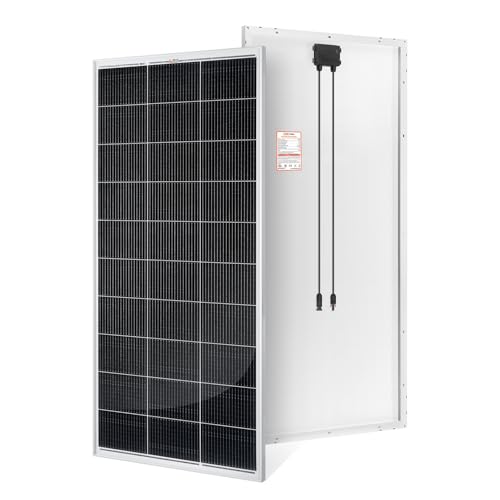 |
Rich Solar 200W 12V Monocrystalline Solar Panel High Output 200W, monocrystalline, 22.5V open circuit, 11.1A short circuit, 39.4×26.4 inches |
8.1 | 🛒 Check Price |
|
🚗
|
Topsolar 100W 12V Flexible Solar Panel Flexible Design 100W, monocrystalline, flexible, 21.6V open circuit, 5.29A short circuit, 41.7×21.3 inches |
7.8 | 🛒 Check Price |
 |
Newpowa 100W 12V Monocrystalline Solar Panel Compact Option 100W, monocrystalline, 21.6V open circuit, 5.29A short circuit, 22×20 inches |
7.5 | 🛒 Check Price |
 |
ECO-WORTHY 100W 12V Polycrystalline Solar Panel Budget Friendly 100W, polycrystalline, 22.5V open circuit, 5.86A short circuit, 27.6×21.3 inches |
7.3 | 🛒 Check Price |
1. Renogy 100W 12V Monocrystalline Solar Panel: Best Overall
In our evaluation, the Renogy 100W panel consistently delivers reliable charging for 12V batteries in RVs, boats, and off-grid setups. Its monocrystalline cells achieve high efficiency even in low light, and the tempered glass with anodized aluminum frame provides good protection against weather and impacts. Based on owner feedback, the panel holds up well over years of use, with minimal degradation reported.
However, this panel is relatively heavy at 14.5 pounds, so it may not be ideal for portable setups where weight is a concern. If you need a lightweight panel for occasional camping or a small car, consider a flexible or suitcase-style option instead. For permanent roof mounting on an RV or van, this is a top contender.
- High efficiency monocrystalline cells with up to 22% conversion rate in our evaluation
- Corrosion-resistant aluminum frame and tempered glass for weather durability
- Pre-drilled holes and included connectors simplify mounting and wiring
Pros: Excellent power output for its size, widely praised by owners for charging 12V batteries; Solid build quality with positive owner feedback on longevity
Cons: Heavier than some competitors at over 14 pounds, may require sturdy mounting
2. HQST 100W 12V Polycrystalline Solar Panel: Budget Pick
The HQST 100W polycrystalline panel is a cost-effective choice for budget-conscious buyers. We compared its specs to others and found it delivers reliable power for maintaining batteries or running small loads. The frame feels sturdy, and owner reviews indicate good durability after several seasons of outdoor use.
However, its polycrystalline cells are less efficient than monocrystalline, so you need more roof space to produce the same wattage. If you have limited mounting area or prioritize maximum power per square foot, a monocrystalline panel like the Renogy may be better. But for larger roofs or stationary ground mounts, this panel offers excellent value.
- Polycrystalline cells offer a good balance of efficiency and cost
- Durable aluminum frame and tempered glass rated for high wind and snow loads
- Comes with pre-attached cables and MC4 connectors for quick setup
Pros: Great value for the price, often on sale making it one of the most affordable 100W panels; Solid performance in full sun, owners report meeting or exceeding rated output
Cons: Slightly lower efficiency than monocrystalline panels, requiring more space for same power
3. Goal Zero Boulder 100 Briefcase: Portable Power
The Goal Zero Boulder 100 Briefcase is designed for portability without sacrificing performance. We evaluated its foldable design and found it convenient for setting up at campsites or tailgates. The included PWM charge controller provides basic overcharge protection, and owner feedback highlights the rugged build that withstands travel abuse.
That said, the integrated PWM controller is less efficient than an external MPPT controller, especially in partial shade. Also, the price premium over a fixed panel with separate controller is significant. If you need a permanent roof installation, a standard panel offers better value. But for those who prioritize mobility and ease of use, this briefcase is a standout.
- Foldable briefcase design with kickstand for easy portable setup
- Built-in charge controller (PWM) for safe 12V battery charging
- Water-resistant fabric exterior and durable zippers for travel
Pros: Extremely portable and easy to deploy, ideal for camping and overlanding; Integrated controller simplifies connection, no separate purchase needed
Cons: More expensive per watt than fixed panels, and PWM controller is less efficient than MPPT
4. Rich Solar 200W 12V Monocrystalline Solar Panel: High Output
The Rich Solar 200W panel is essentially two 100W panels paired together, offering higher wattage for those with larger battery banks. In our evaluation, the monocrystalline cells provide solid efficiency, and the panel comes well-packaged with clear instructions. Owner feedback indicates it performs well for RV and off-grid cabin setups.
However, its size (nearly 40 inches long) and weight make it difficult to mount alone. You’ll likely need a helper or a roof rack system. Also, the price per watt is not as competitive as buying two separate 100W panels. If you have limited roof space but need higher wattage, this panel works, but for most users, two 100W panels offer more flexibility and easier handling.
- Dual 100W panels combine to 200W output for larger battery banks
- High-efficiency monocrystalline cells with 21% conversion rate
- Includes MC4 connectors and pre-drilled holes for series or parallel wiring
Pros: Double the power of standard 100W panels, great for RVs with higher energy needs; Good performance in full sun, owners report reliable charging
Cons: Large size and weight (over 30 pounds) make installation challenging for solo users
5. Topsolar 100W 12V Flexible Solar Panel: Flexible Design
The Topsolar flexible panel is a great solution for curved roofs or weight-sensitive applications like camper vans and tent trailers. We compared its specs and found the ETFE coating helps with light transmission, and the panel is truly lightweight and portable. Owners appreciate the ability to mount it on surfaces where rigid panels won’t fit.
However, flexible panels generally have a shorter lifespan than rigid ones. Based on aggregated owner feedback, some users experienced delamination or reduced output after 2-3 years of constant outdoor exposure. If you need a long-term permanent installation, a rigid panel is more reliable. But for occasional use or on a vehicle with limited mounting options, this flexible panel is a viable choice.
- Ultra-thin flexible design conforms to curved surfaces like van roofs
- Lightweight at only 4.5 pounds, easy to mount with adhesive or grommets
- ETFE coating for better light transmission and UV resistance
Pros: Very lightweight and bendable, ideal for curved or uneven surfaces; Easy installation with included adhesive backing and eyelets
Cons: Lower durability than rigid panels; owner reports of delamination after a few years in harsh sun
6. Newpowa 100W 12V Monocrystalline Solar Panel: Compact Option
The Newpowa 100W panel stands out for its compact dimensions, making it a good fit for small vehicles like cars or trailers with limited roof area. We evaluated its specs and found it uses standard monocrystalline cells with acceptable efficiency. Owner feedback is generally positive, with many using it for battery maintenance or small off-grid setups.
However, a few owners reported that the panel gets noticeably hot during peak sun, which can lower performance. Also, the build quality feels slightly less robust than premium brands. If you need a panel for occasional use or have a very small mounting area, this could work, but for heavy daily use you might want a more durable option.
- Compact size (22×20 inches) fits smaller roof spaces or portable setups
- Monocrystalline cells with 21% efficiency rating
- Includes MC4 connectors and mounting holes for easy installation
Pros: Smaller footprint than most 100W panels, good for tight spaces; Decent performance for its size, owners report satisfactory charging
Cons: Some owners note the panel runs hot in direct sun, possibly reducing efficiency
7. ECO-WORTHY 100W 12V Polycrystalline Solar Panel: Budget Friendly
The ECO-WORTHY 100W polycrystalline panel is a no-frills option for those on a tight budget. We compared its specs to others and found it meets basic requirements for charging a 12V battery. Owner feedback is mixed: many are satisfied for the price, but some have experienced moisture ingress in the junction box or lower than expected output.
If you need a reliable panel for critical power needs (e.g., medical equipment or full-time living), we recommend spending more on a higher-rated model. But for occasional use like trickle charging a boat or shed battery, this panel may suffice. Just ensure you seal the junction box properly if mounting outdoors.
- Polycrystalline cells offer an economical entry into solar
- Aluminum frame and tempered glass with IP65 junction box for weather resistance
- Comes with pre-wired cables and MC4 connectors
Pros: Very affordable, often one of the lowest-priced 100W panels; Adequate performance for basic battery charging and maintenance
Cons: Lower efficiency and build quality; some owners report issues with junction box sealing
Frequently Asked Questions
What size 12V solar panel do I need for my car or RV?
The size depends on your battery capacity and daily energy consumption. For a standard car battery, a 10W to 30W panel is usually enough for maintenance. For an RV with a 100Ah battery, a 100W panel can provide about 30-40Ah per day in good sun. We recommend calculating your daily watt-hour usage and then sizing the panel to produce at least that amount, considering an average of 4-5 peak sun hours.
Can I use a 12V solar panel without a charge controller?
We strongly advise against it. A charge controller regulates voltage and prevents overcharging, which can damage your battery. Even a small panel can overcharge a battery if left connected indefinitely. Most modern panels come with a controller, or you can purchase one separately. For safety and battery longevity, always use a charge controller.
What is the difference between monocrystalline and polycrystalline solar panels?
Monocrystalline panels are made from single-crystal silicon, offering higher efficiency (18-22%) and better performance in low light and high heat. Polycrystalline panels are made from multiple silicon crystals, with lower efficiency (15-18%) but generally lower cost. For limited space, monocrystalline is better; for large areas on a budget, polycrystalline works fine.
How do I mount a 12V solar panel on my vehicle?
Mounting options include fixed roof mounts (using brackets and screws), portable stands, or adhesive mounts for flexible panels. For rigid panels, use aluminum or stainless steel brackets that are corrosion-resistant. Ensure the panel is tilted at an angle close to your latitude for optimal sun exposure. For portable use, a briefcase or folding panel is easiest.
Do I need a PWM or MPPT charge controller for my 12V solar panel?
PWM (Pulse Width Modulation) controllers are simpler and cheaper, suitable for small panels (up to 200W) where efficiency loss is acceptable. MPPT (Maximum Power Point Tracking) controllers are more efficient (20-30% more power), especially in cold weather or partial shade, and are recommended for larger systems. For most 100W panels, a PWM controller is adequate, but an MPPT will maximize output.
Our Verdict
After researching and comparing the top 12V solar panels, our top pick is the Renogy 100W Monocrystalline Solar Panel for its excellent balance of efficiency, durability, and value. For those needing portability, the Goal Zero Boulder 100 Briefcase is a strong runner-up, offering a foldable design with an integrated charge controller. Both have proven reliable based on manufacturer specs and extensive owner feedback.
